by Ralph Wilson
To understand what's involved in planning for the development of Pier 70 into a vibrant, beautiful, and productive resource, you need to understand a few key facts.
Pier 70 is administered by the Port of San Francisco. The Port is an "enterprise agency" of the City of San Francisco. This means that the Port has to pay its own way from operations on Port land, such as leases and fees. The Port doesn't receive money from the San Francisco general fund, and it’s generally been held that the Port can’t participate in city bond issues.
One thing this means is that there is no simple way to come up with the many millions of dollars needed to rehabilitate the historic resources on the site or clean up any toxic waste, let alone do major development. There’s no big pot of money that would enable the Port to develop Pier 70 itself, even if the development could be expected to pay for itself eventually.
As stated in a Port document:
“Most of the Port’s property [including most of Pier 70] consists of former public tidelands, which are held in public trust for the people of California. As trustee since 1969 pursuant to the Burton Act, the Port Commission is responsible for managing this property on a self-supporting basis in conformance with the Public Trust Doctrine. Under this doctrine, the Port is required to promote navigation, fisheries, and maritime commerce, to protect natural resources and to develop recreational uses that attract people to enjoy the Bay and waterfront.”
This means that the port can’t do anything it wants with the land; it must use the land for purposes that are considered to be beneficial and appropriate. Determining what exactly are appropriate and beneficial uses for public trust lands is an interesting process, to say the least.
For several years the Port has been actively trying to find ways to preserve and develop the historic structures while preserving the present maritime uses.
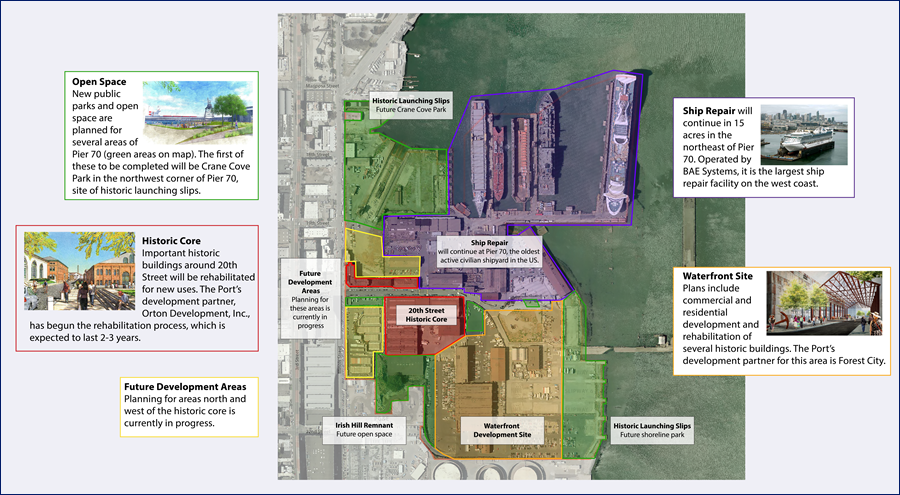
The Port has identified areas of Pier 70 outside of the ship repair area that it would like to develop, or rather, find developers for. A few years ago, during better economic times, a process was started that would have brought in two entities to develop different parts of the area. One entity was a private developer that planned on building several commercial buildings and the other was a group of arts organizations that hoped to develop several historic shipyard buildings into arts facilities.
Sadly for all of us who care about this area, the burst of the economic bubble caused this initiative to fall apart.
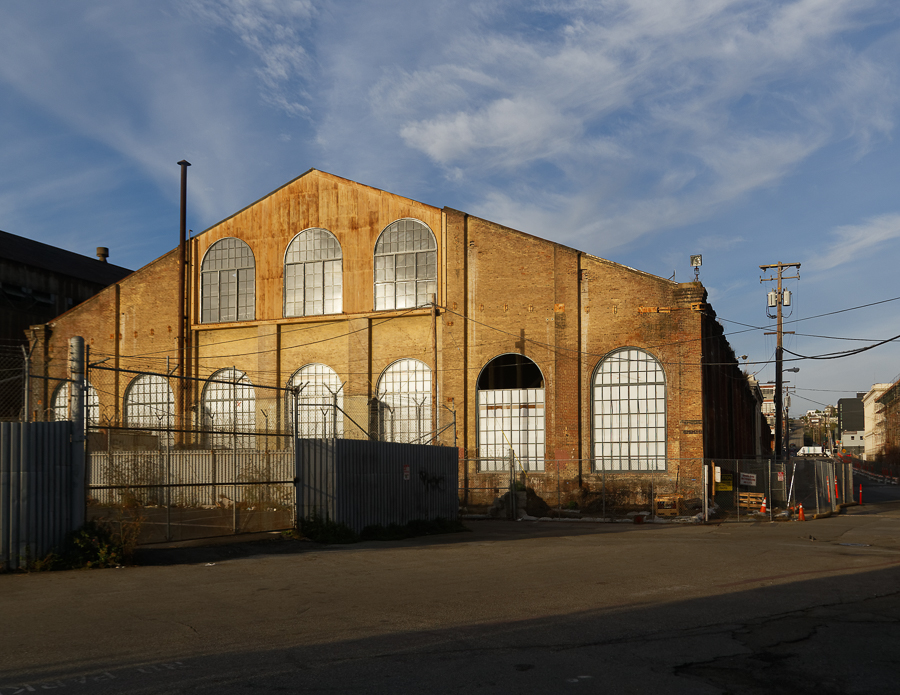
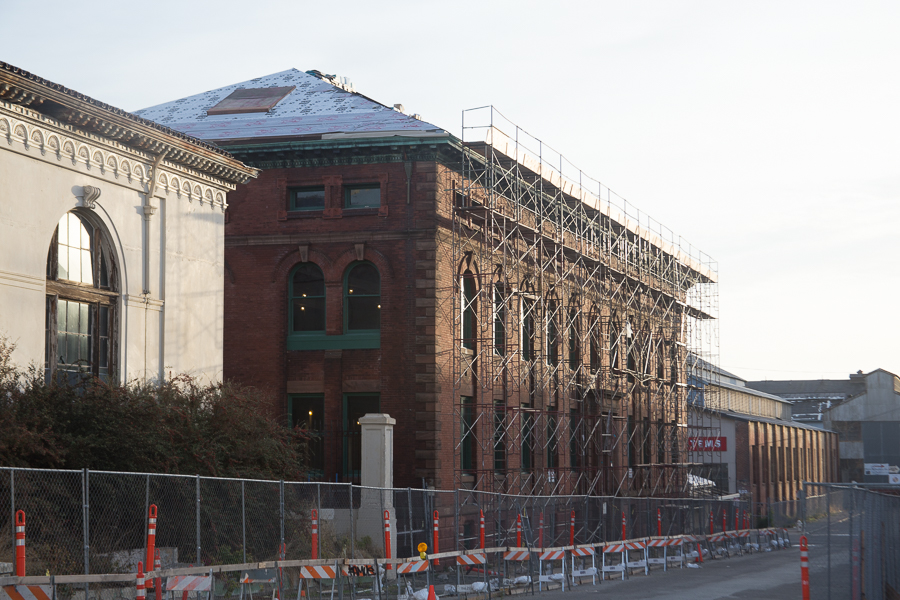
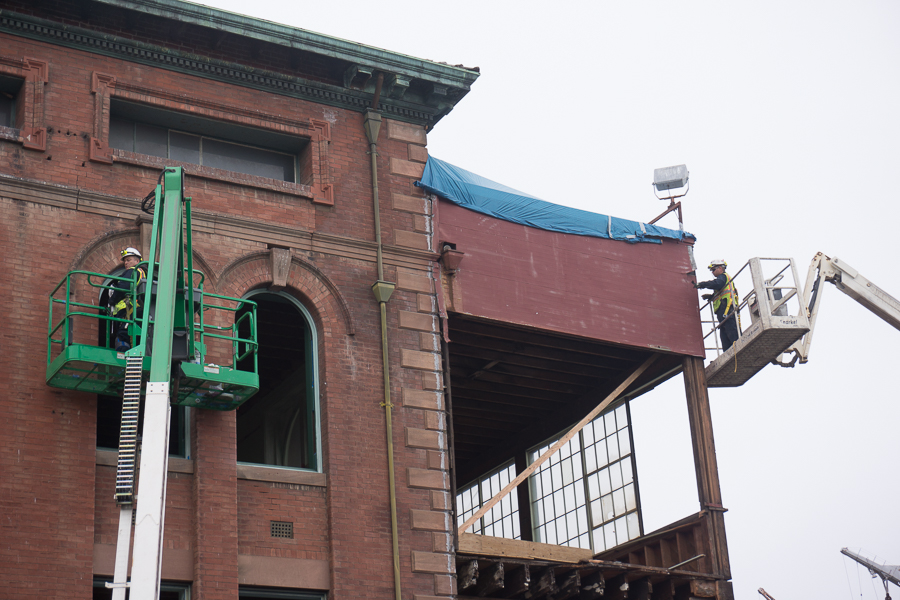
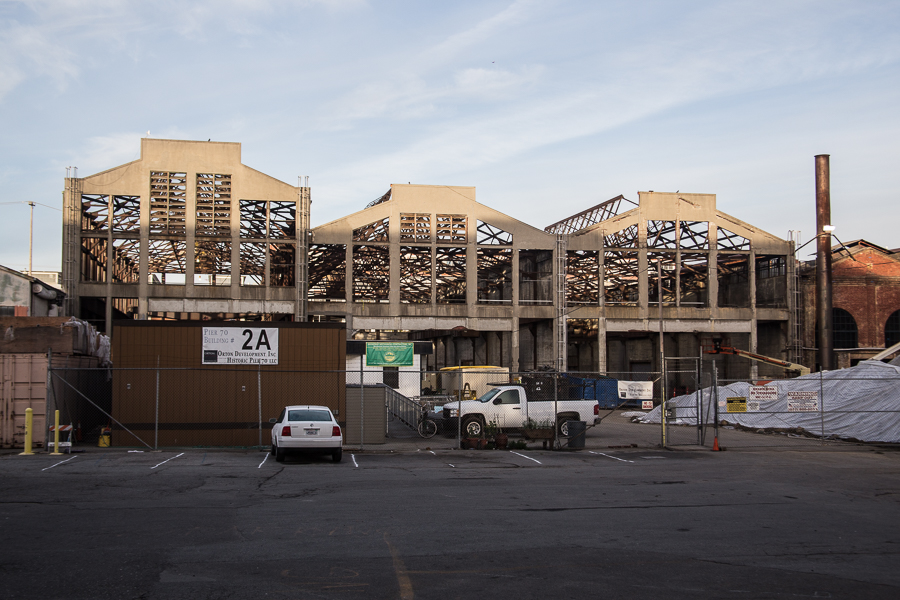
Although the economic doldrums continue, the planners at the Port have become increasingly concerned about the condition of several of the historic buildings. Two of the most important, Buildings 104 and 113, are unreinforced masonry. Recently the decision was made to mothball them, which means they may not be used or occupied in any way until they have been seismically strengthened. Other structural problems affect the historic structures, including leakage and broken windows. Port planners express a sense of urgency about pursuing “adaptive reuse” of the historic buildings as the only viable way of preserving them.
How much would it take to rehab the buildings? Hard to say, but certainly several tens of millions of dollars. Clearly, a big overall vision will be needed to devise strategies for saving the historical resources and creating an the important urban resource that Pier 70 can become.
Recently, an exciting project brought a group of talented design and urban planning students in a unique internship program focused on developing a vision for Pier 70's future. Sponsored by San Francisco-based design and planning firm EDAW, this program did a tremendous amount of work in a short time to analyze the issues affecting Pier 70's future and to bring the best of modern urban design thinking to bear. The vision they came up with, though not a final master plan, was exciting to most of us who are trying to help preserve and develop Pier 70.
Visit the EDAW Pier 70 Internship Website
The Port has convened a group of advisors from neighboring areas and interested groups. This group meets periodically (usually once a month) with Port staff to discuss what’s happening with development efforts. These small, informal meetings are open to the public and are a great place to learn more about the area.
Visit the Port of San Francisco Web site for information about Pier 70 Planning Initiatives .